Ashes to Artworks Blog
Thinking about getting another pet after losing one? Here's what grief researchers and veterinary behaviorists actually say about timing, guilt, and readiness.
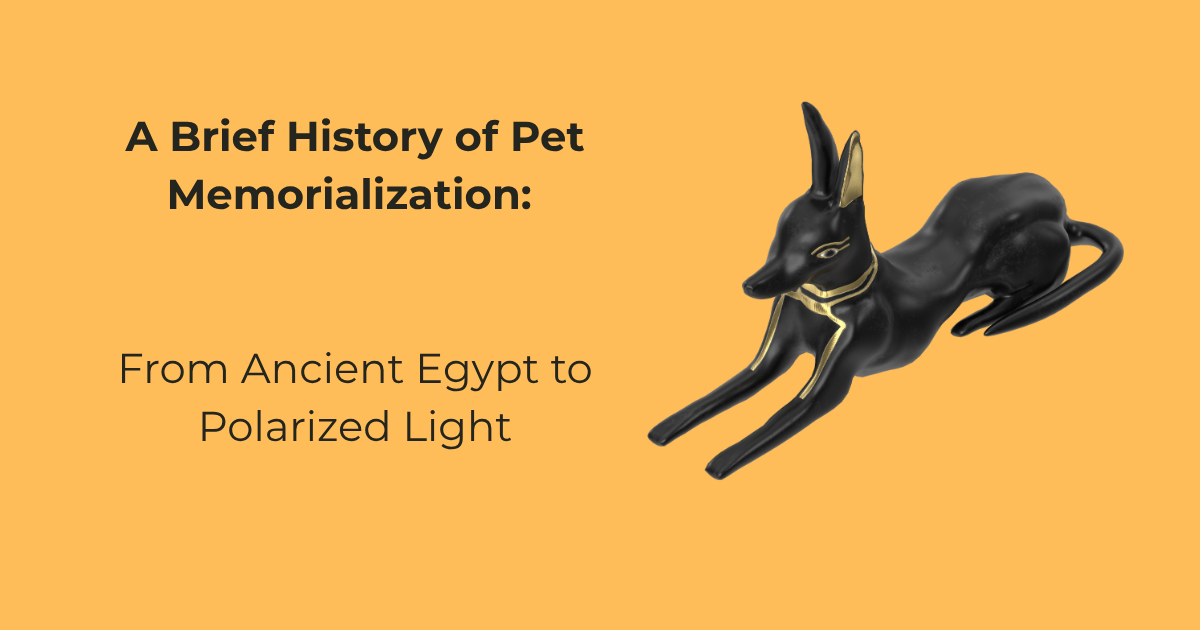
Humans have been honoring their animal companions for thousands of years. A look at how pet memorialization has evolved — and where science is taking it next.
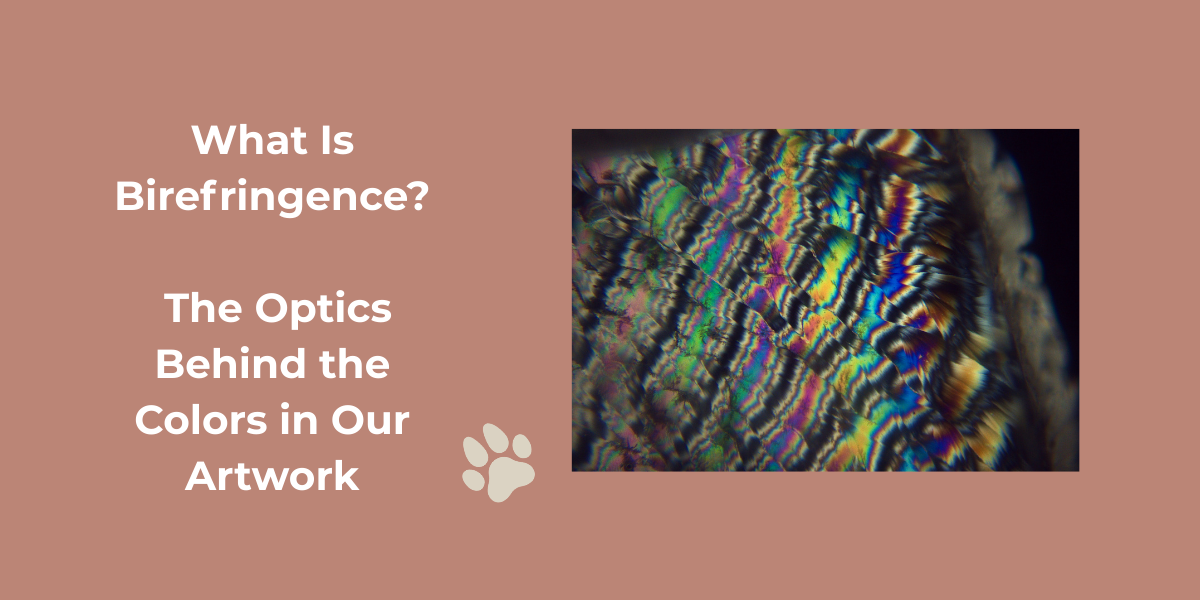
The vivid colors in Ashes to Artworks images aren't painted or filtered. They're caused by birefringence — a real optical phenomenon. Here's the science.

Helping a child grieve a pet is one of the hardest conversations a parent faces. Here's what grief experts recommend — and what to avoid.
How Long Should You Wait Before Doing Something With Your Pet's Ashes? The small box arrives at your door, or you carry it home from the crematory. You set it on the mantle, or the nightstand, or the shelf in the closet — and then you don't touch it again for weeks. Maybe months. Maybe longer. If that's you, you're not doing anything wrong. There is no correct timeline for what to do with your pet's ashes. But the question of when — and whether — to make a decision is one that many grieving pet owners wrestle with quietly, often feeling like they're behind some imaginary schedule. You're not behind. But it helps to understand what your options are, what the decision actually requires, and how to recognize when you might be ready to take a next step — whatever that looks like for you. First: The Ashes Are Fine One of the most common concerns pet owners have is whether the ashes will degrade or become unusable over time. The short answer is no. Cremated remains are almost entirely composed of calcium phosphate and other minerals — the same materials that make up bone. These do not decay, do not smell, and do not change chemically over time. Whether your pet's ashes have been sitting in a box for three weeks or three years, they remain just as viable for any memorial option you might choose — whether that's placing them in an urn, scattering them, incorporating them into jewelry, or creating scientific artwork through a process like polarized light microscopy. Time does not close your options. Whatever you decide, you can decide it on your own schedule. Why Some People Wait Grief does not move in a straight line, and the ashes — that small, tangible weight of them — can feel like a decision you're not ready to make. Many people find that as long as the ashes are present and undecided, it feels like the loss itself is still somehow unresolved. Others find the opposite: the ashes are a comfort, and the idea of scattering them or transforming them feels like a second loss. There is nothing pathological about either response. These are both expressions of love and the difficulty of what you're navigating. Grief counselors who specialize in pet loss often note that the question of what to do with ashes can be one of the most emotionally charged decisions in the bereavement process precisely because it feels so final. It doesn't have to be. Many memorial options — artwork, jewelry, keepsakes — don't require you to give up the ashes. A small portion is used, and the rest remain with you. Signs You Might Be Ready There is no universal signal that you're ready. But some people describe the following as moments when the decision started to feel possible: You find yourself wanting to do something intentional with your love for them — not to close a chapter, but to give that love a place to live. You notice that thinking about a memorial option brings you a sense of warmth rather than dread — an anticipation of honoring them rather than a feeling of finality. You've moved through the sharpest edge of acute grief, and while you still miss them deeply, you feel a pull toward creating something lasting rather than simply waiting. None of these need to be fully true before you start exploring options. Sometimes the exploration itself is part of the grief process — a way of thinking through what your pet meant to you and what you want to carry forward. Signs You're Not Ready — And That's Okay Equally important: if the thought of doing anything with your pet's ashes still fills you with resistance or sadness, that is a completely valid signal to wait. Grief doesn't operate on anyone else's schedule. The ashes will be there when you are. There is no expiration date on this decision. And there is no version of waiting that is wrong. What Your Options Actually Require Part of what makes the decision feel so heavy is that it's vague. Breaking down what each option actually involves can make it feel more manageable: Keeping ashes in an urn requires nothing — you simply choose a vessel that honors them and keep it somewhere meaningful. Scattering ashes is a one-time decision and is typically irreversible, which is why many people wait longer for this option or scatter only a portion. Memorial jewelry, artwork, and keepsakes typically require only a teaspoon of cremains — leaving the vast majority of the ashes intact. These options don't require you to let go. At Ashes to Artworks, we use just one teaspoon of your pet's cremains to create one-of-a-kind scientific artwork — images that reveal the hidden crystalline structures unique to your individual pet, captured through polarized light microscopy. You keep everything else. And we're here when you're ready, with no pressure and no rush. There Is No Right Answer The most important thing to know is this: whatever you decide, and whenever you decide it, is the right choice. Some people find deep comfort in scattering their pet's ashes in a place they loved. Others keep them close, on a shelf or in a locket. Others create artwork or keepsakes and feel a sense of peace in having something beautiful and permanent to hold. Your pet was yours. The way you honor them is yours too. If you're not sure where to start, we're always happy to answer questions at support@ashestoartworks.com — no obligation, just a conversation.

A home memorial for your pet doesn't have to be elaborate. Here's how to create a meaningful space that honors their memory and supports your grief.

: Science confirms what pet owners already know: the bond between humans and their pets is neurologically real — and that's why losing them hurts so much.
What to Do With Your Pet's Ashes: 7 Meaningful Memorial Options You weren't prepared for how heavy that little box would feel. When you bring your pet's ashes home, it can be hard to know what to do next. There's no rulebook for grief, and no single right answer. Some people know immediately. Others keep the urn on a shelf for months — or years — while they decide. Both are completely okay. When you're ready, here are seven meaningful options for honoring your pet's cremated remains — from the traditional to the unexpected. 1. Keep Them at Home in an Urn The most common choice, and often the most comforting one. Having your pet's ashes nearby — on a mantle, a bookshelf, or a bedside table — keeps them close in a tangible way. Urns come in an enormous range of styles, from simple wooden boxes to hand-painted ceramics to custom engraved keepsakes. Many pet owners choose an urn that reflects their pet's personality — something that feels like them. Things to consider: If you move frequently or have young children, a secure, closeable urn is worth the investment. Look for something that seals properly so the ashes are protected. 2. Scatter Them in a Meaningful Place Many pet owners choose to scatter their pet's ashes in a place that was special to them — a favorite hiking trail, a beloved beach, the backyard where they used to play. Scattering can feel like a ritual of release — a way of returning your pet to the world they loved. Some families do it immediately after receiving the ashes. Others wait years until the moment feels right. Things to consider: Check local regulations before scattering on public land or in bodies of water. Rules vary by location. And remember — you only need to keep back a small amount if you'd like to pursue any of the other options on this list. 3. Plant a Memorial Tree or Garden Biodegradable urns designed to be buried with a tree or plant have become increasingly popular — and for good reason. The idea that your pet's remains help something living grow is deeply meaningful for many people. You can purchase specialized urns designed to hold ashes alongside a seed or sapling, or simply bury a portion of the ashes near a tree or garden area you plant in their honor. Things to consider: If you rent your home or may move in the future, a potted memorial tree you can take with you might be a better option than planting in the ground. 4. Create Memorial Jewelry A small amount of cremated remains — sometimes as little as a pinch — can be incorporated into glass beads, pendants, rings, or other jewelry. The result is a piece you can wear every day, carrying your pet with you wherever you go. Memorial jewelry ranges from simple and understated to elaborate and custom-designed. Many people find comfort in having something physical to touch when they're missing their pet. Things to consider: Quality varies widely in this space. Look for makers with strong reviews and clear information about their process. Expect to pay $100-$400+ for quality pieces. 5. Commission a Painted Portrait Working from a photograph, a portrait artist can create a painting or drawing of your pet — a classic memorial that captures how they looked and felt to you. Some artists incorporate a small amount of ashes directly into the paint, making the portrait itself a physical part of your pet. Others create purely image-based work from photos. Things to consider: The quality of the final piece depends almost entirely on the skill of the artist and the quality of your reference photos. Review portfolios carefully and ask to see examples of work in a similar style to what you're imagining. 6. Transform Ashes into Glass Art Glassblowing artists can incorporate cremated remains into hand-blown glass pieces — paperweights, ornaments, sculptures, or vessels. The ashes become part of the glass itself, visible as swirls of color and texture within the finished piece. These pieces are genuinely beautiful and uniquely tactile. Holding a glass memorial has a weight and warmth that many people find deeply comforting. Things to consider: Glass art memorials are typically on the higher end of the price range, often $200-$500+. They're also fragile, so think carefully about where you'd display or store them. 7. Turn Ashes into Scientific Crystal Artwork This is what we do at Ashes to Artworks — and we think it's one of the most remarkable options available, though we're admittedly biased. Using the same polarized light microscopy techniques that geologists use to study rock formations, we extract minerals from your pet's cremated remains and grow them into crystals. When photographed under cross-polarized light, those crystals reveal extraordinary rainbow patterns — colors that are genuine optical phenomena, not painted or digitally altered. The result is a high-resolution digital image that is scientifically, chemically, and visually unique to your pet. No two pets ever create the same patterns. The colors and structures are influenced by their diet, environment, age, and individual biology — a literal portrait written in their own chemistry. We deliver four high-resolution digital images with full usage rights — you can print them at any size, unlimited times, and share them with family members anywhere in the world. What makes this different: Unlike physical memorials that exist in one place, digital artwork can be everywhere at once. Frame it. Put it on a mug. Share it with your sister in another state. The artwork belongs entirely to you. Learn more at ashestoartworks.com | Starting at $99 | 5% donated to Houston animal shelters "Because love never fades, it shines." There's No Wrong Choice Every option on this list is a valid, meaningful way to honor a pet you loved. The right choice is the one that feels true to your relationship with them — and true to who you are. Some people do several. Some do none, and simply keep the ashes in a plain box on the shelf, and that's okay too. Grief doesn't follow a schedule, and there's no deadline on deciding. When you're ready, we're here. — Ptim Pellerin , Chief Science Officer Ashes to Artworks | ashestoartworks.com | support@ashestoartworks.com
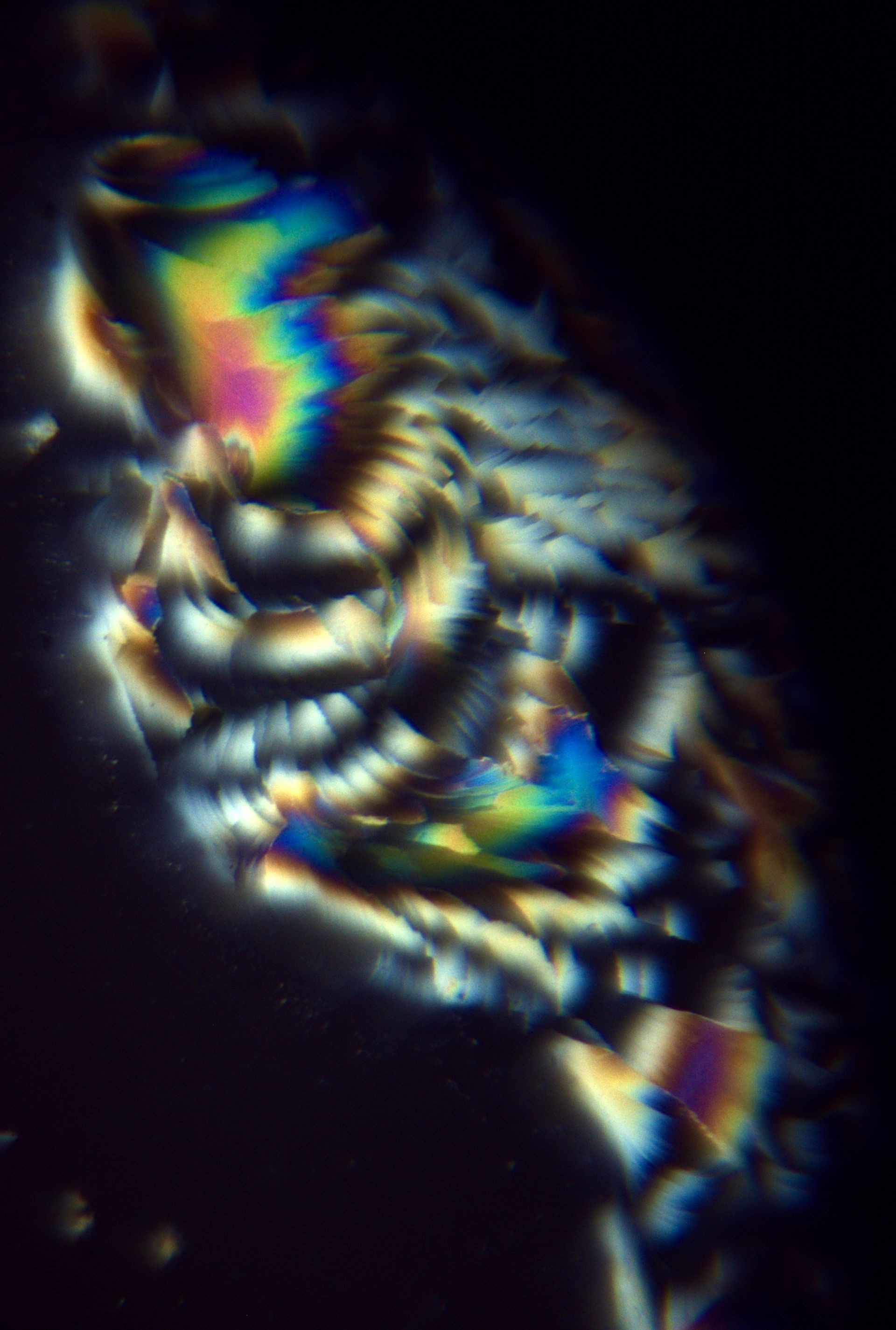
If you've searched "what do cremation ashes actually look like," you've probably found surprisingly little information. Most crematoriums return ashes in sealed containers, and many people never open them. Those who do typically see gray-white powder with some larger bone fragments. But here's something most people don't know: cremation ashes aren't just gray. Under specific conditions—using specialized scientific equipment—those ashes can reveal stunning rainbow patterns. Not through any artificial enhancement, but through genuine optical phenomena. Here's the science behind what's really happening. ## What Pet Ashes Actually Contain Cremation ashes are mostly: - Calcium phosphate (from bones) - Trace minerals accumulated over a lifetime - Small amounts of carbon - Various metal oxides What makes each pet's ashes unique: Just like humans, every pet accumulates different trace elements based on: - Their diet (commercial food, raw diet, treats, table scraps) - Where they lived (soil composition, water minerals) - Their health history (medications, supplements) - Environmental exposure (urban vs. rural, coastal vs. inland) These differences are usually invisible to the naked eye. But they're there, encoded in the mineral composition of the ashes. ## The Hidden Structure in Ashes Here's where it gets interesting: Cremation ashes contain crystalline structures at the microscopic level. What does that mean? When bones are cremated at high temperatures (1,400-1,800°F), some of the calcium and mineral compounds form tiny crystals as they cool. These crystals have specific geometric arrangements of atoms. Think of snowflakes—each one has a six-sided structure because of how water molecules arrange themselves when freezing. Similarly, the minerals in cremation ashes form microscopic crystal structures based on their chemical composition. But here's the crucial part: These crystal structures are too small to see with the naked eye. Under normal light, ashes just look gray. To see the patterns, you need two things: 1. A microscope 2. Polarized light ## What Is Polarized Light? Normal light waves vibrate in all directions. Polarized light vibrates in only one direction—like looking through a fence where you can only see vertically. When polarized light hits crystalline structures, something remarkable happens: Different minerals rotate the light by different amounts. This rotation creates colors—specific wavelengths of light that our eyes see as blues, purples, golds, oranges, and greens. This isn't artificial coloring. It's a genuine optical phenomenon called birefringence. Geologists use this exact technique to study rock samples. Doctors use it to identify crystals in kidney stones. And yes—it can be used to reveal the hidden patterns in cremation ashes. ## How the Process Works Step 1: Sample Preparation A small amount of ashes (typically one teaspoon or less) is carefully cleaned and processed to isolate the mineral components. Step 2: Crystal Growth Those minerals are placed in climate-controlled conditions where they can form larger, more visible crystals. This isn't creating something new—it's allowing what's already there to become visible. (Think of it like letting salt water evaporate to see the salt crystals that were always dissolved in the water.) Step 3: Microscopy The crystals are placed under a specialized microscope equipped with: - Cross-polarized light filters - High-resolution camera - Precise focus control Step 4: Photography As the polarized light passes through the crystals, their unique structure creates specific color patterns. These patterns are photographed at high resolution. The result: Images showing the actual optical properties of the minerals that were part of your pet's physical being. ## Why Every Pet Creates Different Patterns Remember how each pet accumulates different trace elements? Those differences create different crystal structures, which create different color patterns. Factors that influence the patterns: Diet: - Calcium-rich foods vs. phosphorus-rich - Mineral supplements - Water source (well water vs. tap vs. filtered) Environment: - Geographic location - Soil composition in areas where they played - Air quality Health History: - Long-term medications - Supplements for joint health, heart conditions, etc. - Dietary changes due to health issues Individual biology: - How their body processed and stored minerals - Metabolic differences The result: No two pets ever create identical patterns. Ever. It's a visual representation of their unique biological existence. ## What the Colors Mean Different minerals create different colors when viewed under polarized light: Blues and Purples: Often associated with calcium phosphate at specific crystal orientations Golds and Yellows: Can indicate certain metal oxides or specific crystal structures Oranges and Reds: Sometimes appears with iron-containing compounds Greens: May result from copper-based minerals or specific crystalline arrangements Black: Areas where no light passes through, creating contrast Important note: These are genuine optical effects, not added colors. Nothing is painted, dyed, or digitally altered. ## Can You See These Colors Without Special Equipment? Short answer: No. With the naked eye, cremation ashes look gray-white. With a regular microscope and normal light, you'd see texture and shapes, but not these rainbow colors. You need: - Polarized light microscopy equipment (typically $10,000-50,000) - Understanding of crystal optics - Photography skills to capture the patterns That's why most families never know this hidden dimension exists in their pet's ashes. ## Is This Different From "Mixing Ashes Into Paint"? Yes—completely different. Some memorial artists mix ashes into paint to create artwork. The ashes become part of the art, but the visual result comes from the paint colors chosen by the artist. With polarized light photography: - No paint is added - No colors are chosen by an artist - The patterns come directly from the optical properties of the ashes themselves - It's documentation of a scientific phenomenon, not artistic interpretation Both approaches have value. But they're fundamentally different processes. ## Memorial Artwork From This Process At Ashes to Artworks, we use this scientific process to create memorial artwork. Here's what we do: 1. Extract minerals from a small sample (just 1 teaspoon) of your pet's ashes 2. Grow crystals in our climate-controlled Houston laboratory 3. Photograph them under cross-polarized light using specialized microscopy equipment 4. Provide you with high-resolution digital images with full usage rights What you receive: - Complete digital ownership with no restrictions - Print at any size, as many times as you want - Share copies with family members - Genuine scientific documentation of your pet's unique chemistry - Something that literally could not exist for any other pet Pricing: - 1 digital image: $99 - 4 digital images: $149 We serve families nationwide and donate 5% of every purchase to Houston animal shelters. Learn more: ashestoartworks.com ## The Bigger Picture Whether or not you choose to create memorial artwork, knowing that these patterns exist might change how you think about cremation. Your pet's physical being—the bones they grew, the minerals they accumulated over a lifetime of meals and walks and naps in the sun—contains hidden complexity. Science can reveal it. Or you can simply know it's there. Either way, they were—and are—truly one of a kind.
What Your Pet's Ashes Can Reveal: The Science Behind Memorial Artwork When people first hear about what we do at Ashes to Artworks, the most common reaction is curiosity mixed with skepticism. "There are patterns in pet ashes? Real patterns, or is this just creative photography?" It's a fair question. We live in an age of filters and AI-generated art, where it's hard to know what's authentic anymore. So let me walk you through exactly what happens when you send us a small amount of your beloved pet's cremated remains. It Starts With Chemistry, Not Camera Tricks Your pet's ashes aren't just uniform gray powder. They contain a complex mixture of elements - the physical building blocks that once formed bone, tissue, and life itself. Each animal's composition is unique, influenced by their diet, their environment, their health history, even the water they drank throughout their life. We've spent years developing a proprietary laboratory process to extract and concentrate specific compounds from these ashes. This involves multiple phases: cleaning, buffering, extracting, and concentrating. The entire chemistry process takes about two hours of active work, with waiting periods between each phase. What we end up with is a concentrated solution that carries your pet's unique chemical signature. Growing Crystals: Where Science Becomes Art From that concentrated solution, we grow crystals. This isn't metaphorical. We're literally creating crystalline structures in our climate-controlled laboratory. How these crystals form - their geometry, their internal structure, the way they develop - depends entirely on the chemical composition we extracted from your pet's remains. A dog who lived in one part of the country will have different trace elements than one who lived elsewhere. A cat who ate primarily fish-based food will have a different composition than one who ate poultry. These differences matter. They influence crystal formation in ways that are small but significant. The process takes several hours, sometimes longer depending on the specific chemistry we're working with. We can adjust temperature and other variables to influence growth rate, but we can't control what patterns emerge. That's determined by what your pet's body contained. Polarized Light: The Moment of Revelation Once crystals have formed, we move to the microscope. We use an inverted phase contrast microscope with polarizing filters - the same type of equipment geologists use to identify minerals and study rock formations. When polarized light passes through crystalline structures, something remarkable happens. Different molecular arrangements cause light to bend at different angles. Some wavelengths pass through easily. Others bend, split, interfere with each other. What emerges on the other side is color - not added by us, not enhanced by software, but created by the fundamental physics of how light interacts with matter. We spend 3-4 hours with each pet's crystals, systematically exploring different angles, different lighting conditions, different areas of crystal formation. We're looking for the moments when the patterns are most striking, most distinctive, most... them. Why Every Pet Creates Different Patterns This is the question we get asked most: "How do you know these patterns are unique to my pet?" Because chemistry doesn't lie. The crystal structures we grow are direct expressions of your pet's physical composition. Two different animals will virtually never produce identical patterns because their chemical makeups are different. Even littermates who ate the same food and lived in the same house will have variations. Think of it like a fingerprint, but instead of skin ridges, it's the elemental signature of a life lived. The calcium that formed their bones, the trace minerals that accumulated over years, the compounds that made them physically who they were - all of this influences how crystals form and how light moves through them. If we processed the same pet's ashes twice, the patterns would be similar - you'd recognize they came from the same source - but not identical. Crystal formation has natural variability, just like snowflakes from the same cloud are similar but not clones. What You Actually Receive After all of this - the chemistry, the crystal growth, the hours of observation - you receive four high-resolution digital images. These aren't snapshots. They're archival-quality photographs suitable for printing at museum-grade standards. You can frame them, share them with family members, print them at any size, keep them digitally forever. Some people frame one large print for their home. Others print all four and create a gallery wall. We've had families print small versions for keepsake lockets. One client printed hers on canvas and donated a copy to the veterinary clinic where her dog spent his final day, as a way of saying thank you. The images are yours to use however brings you comfort. The Question of "Why" The practical explanation of our process is straightforward: chemistry, crystallography, optics. But that doesn't answer the deeper question people are really asking when they reach out to us. Why would someone want this? After a pet dies, you're left with physical remains that feel both precious and impossible. An urn on a shelf. Ashes you can't quite bring yourself to scatter. A cremation box from the veterinarian that you hide in a closet because seeing it hurts too much. We can't bring them back. Nothing can. But what we can do is reveal something about them that you've never seen before - something that was always there, in the physical structure of who they were, but invisible until now. When people receive their images, they often tell us it feels like discovering a secret their pet left behind. A way of saying "I'm still here, just differently." One client described it this way: "It's not that I needed proof that she mattered. I know she mattered. But seeing that her body - even after death - can still create beauty... it made the grief feel less like an ending and more like a transformation." Not For Everyone, And That's Okay This service isn't for everyone, and we're upfront about that. Some people find deep comfort in traditional memorials - a burial plot, scattered ashes in a meaningful place, a simple urn on the mantle. Those are beautiful, honored ways to say goodbye. This is for people who need something else. Something tangible but not physical. Something scientific but not cold. Something that acknowledges both the reality of death and the persistence of... something. Light, pattern, beauty, memory - whatever word feels right to you. We work with about 20-25 pet memorials each month. That number is intentional. Each one requires hours of focused laboratory work and observation. We could scale up, hire assistants, systematize the process for volume. But then it would become manufacturing instead of what it actually is: patient attention applied to individual loss. The Grief No One Warns You About Here's something we've learned from hundreds of conversations with grieving pet owners: people are often surprised by how deeply losing a pet affects them. Friends who've never had animals don't quite understand. Coworkers expect you to be "over it" after a week. There's this cultural message that pet grief is somehow lesser than other losses - that you should be sad for a bit, then move on. But anyone who's loved a pet knows the truth. They were there for your whole life - or at least, the part of your life when you needed them most. They saw you at your worst and stayed anyway. They asked for so little and gave you everything they had. When they die, the absence is enormous. We can't fix that. But what we can do is create a space where your grief is taken seriously. Where the fact that you want to invest time and money into honoring your pet's memory is treated as completely rational, because it is. Your grief deserves more than a condolence card and a week of sadness. It deserves whatever helps you heal. What Happens Next If you're reading this and thinking about whether this might be right for you, here's what we recommend: Sit with the idea for a while. There's no rush. Your pet's ashes will be just as viable in a month, a year, five years as they are today. Crystal formation doesn't depend on freshness. If it still feels right after you've had time to think, reach out. We'll have a conversation about your pet, what you're hoping this memorial might provide, whether this feels like the right fit. No sales pressure, no scripts. Just honest discussion. If you decide to move forward, you'll send us one teaspoon of ashes - less than 1% of typical cremated remains. We'll document everything, keep you updated on timing, and deliver your images within 3-4 weeks. And if you decide this isn't for you? That's completely okay too. Grief is personal. What helps one person might not help another. We're one option among many. A Final Thought Every pet memorial we create starts the same way: a small amount of ash in a container, sent to us by someone who loved deeply and lost painfully. What ends up emerging - the crystal patterns, the colors, the unexpected beauty - is different every single time. We've done this hundreds of times now, and it never stops being remarkable. The fact that what looks like uniform gray ash contains this hidden complexity. That the same elements that formed life can, through careful chemistry and patient observation, create light. Your pet may be gone. But the physical reality of them - the actual matter that made them who they were - can still create something beautiful. Sometimes, that's enough to make the grief a little more bearable. Interested in learning more about the process or seeing samples of memorial artwork? Visit ashestoartworks.com or email us at support@ashestoartworks.com . We donate 5% of every purchase to local animal shelters, because the best way to honor the pets we've lost is to help the ones still waiting for homes.